Inside KR
KR Decarbonization Magazine
VOL.13 | JULY 2026
KR, EcoPro HN and HD Korea Shipbuilding & Offshore Engineering Jointly Develop Ammonia Engine Exhaust Gas After-Treatment System
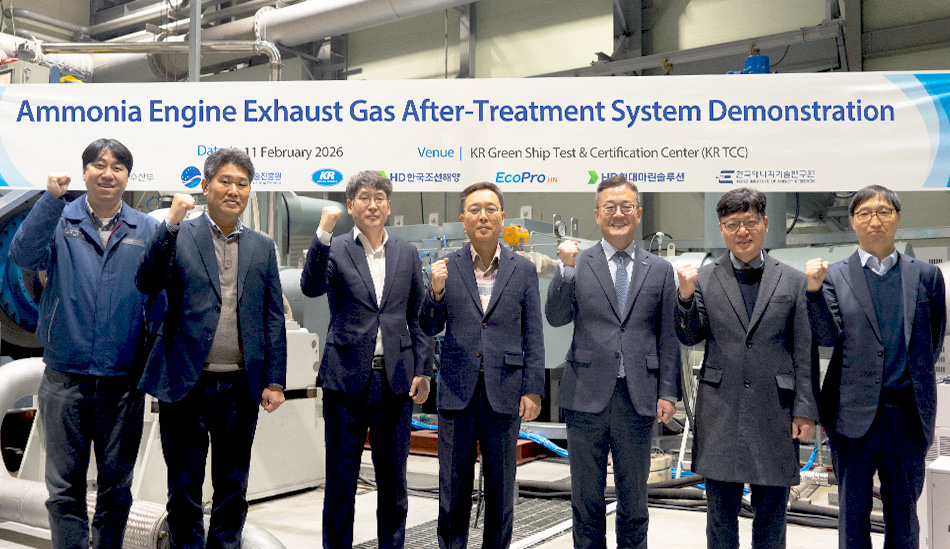
Land-Based Demonstration Conducted at KR TCC, Proving Durability and Performance
KR announced the successful development of an exhaust gas after-treatment system for ammonia-fueled engines, following the completion of a land-based demonstration and showcase. The system achieved a 95% reduction in nitrogen oxides (NOx) emissions and a 99.7% reduction in ammonia (NH₃) emissions, while reducing ammonia slip from an initial level of 10,000 ppm to 30 ppm.
KR is leading the government-funded project titled “Comprehensive Management Technology Development for Ship Greenhouse Gas Emissions,” supported by the Ministry of Oceans and Fisheries and the Korea Institute of Marine Science& Technology Promotion.
The newly developed system is Korea’s first microwave catalyst-heating exhaust gasafter-treatment system applied to MW-class ammonia (NH₃) engine exhaust. The technology was jointly developed by KR in collaboration with EcoPro HN and HD Korea Shipbuilding & Offshore Engineering.
The prototype underwent extended operational tests at the KR Green Ship Test & Certification Center (KR TCC), where its durability and performance were successfully verified.
In addition to KR and its partners, the project has also brought together HD Hyundai Marine Solution, the Korea Institute of Industrial Technology, and other leading industry, academic, and research institutions to carry out end-to-end technology development and demonstration.
Ammonia is gaining growing attention as a next-generation carbon-free marine fuel, as it produces no carbon dioxide (CO₂) or sulfur oxides (SOx) during combustion and is relatively easy to store and transport. The International Energy Agency (IEA) projects in its “Net Zero by 2050” roadmap that ammonia could account for approximately 44% of total marine fuel consumption by 2050.
However, exhaust gas from ammonia engines may contain air pollutants such as nitrogen oxides (NOx, N₂O) and unburned ammonia. Securing effective after-treatment technology is therefore essential and critical for commercialization. These pollutants can be converted into harmless substances using catalytic reactions,but maintaining optimal catalyst activation temperature is widely considered a key technical challenge.
The newly developed system addresses this challenge by applying a microwave-based catalyst heating method that enables rapid and efficient catalyst activation, significantly enhancing exhaust gas purification performance. This system effectively reduces emissions under a wide range of operating conditions and is designed to ensure stable operation with minimized fuel consumption, even in changing navigation environments.
KR Awards AIP to G-Marine Service for "Machine Learning-Based Fuel Savings Calculation Methodology"
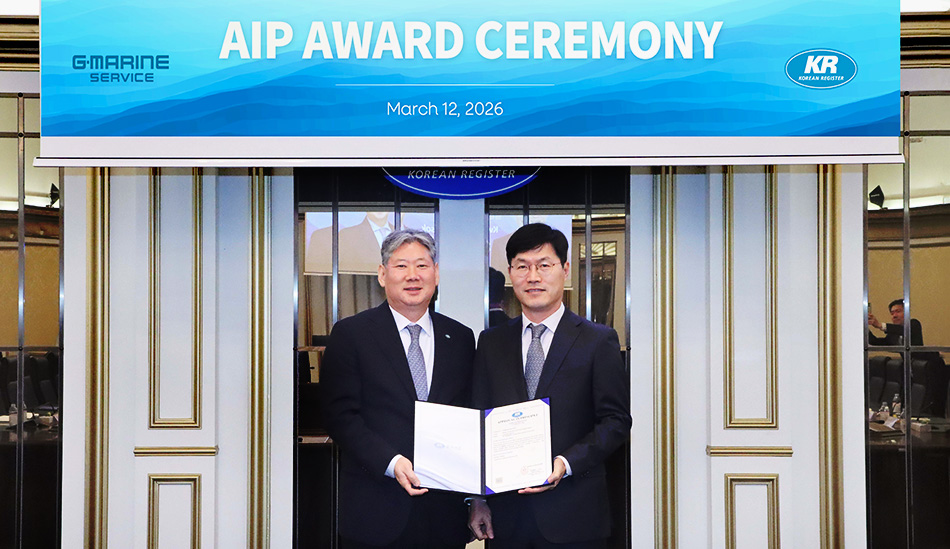
Objectively evaluating fuel-saving effects by reflecting differences in operating environments
KR has awarded an Approval in Principle (AIP) to G-Marine Service for its “Machine Learning-Based Fuel Savings Calculation Methodology.”
Recently, the shipping industry has increasingly adopted various energy-saving devices (ESDs) and voyage optimization technologies to minimize fuel costs and greenhouse gas (GHG) emissions. However, because a vessel’s fuel consumption varies significantly depending on external factors - such as wind, waves, and cargo load - it has been challenging to objectively evaluate the actual efficiency gains of these technologies.
The methodology developed by G-Marine Service leverages ship operational data and machine learning to predict expected fuel consumption under specific operating conditions. By comparing these predictions with actual fuel usage, the system provides a quantitative assessment of fuel savings.
In particular, the machine learning model analyzes the impact of diverse variables, including wind speed, sea state, draft, and deadweight, allowing for the correction of environmental factors and a more precise evaluation of true fuel-saving performance.
This AIP is significant as it verifies the technical validity of a data-driven methodology for objectively assessing ship fuel efficiency. It is expected that shipowners and operators will now be able to confirm the effectiveness of various fuel-saving technologies and optimization strategies with greater reliability.
KR Leads Verification of Kumyang Shipping’s Electric Hybrid Vessel Tech... Achieves Grade 3 Green Ship Certification
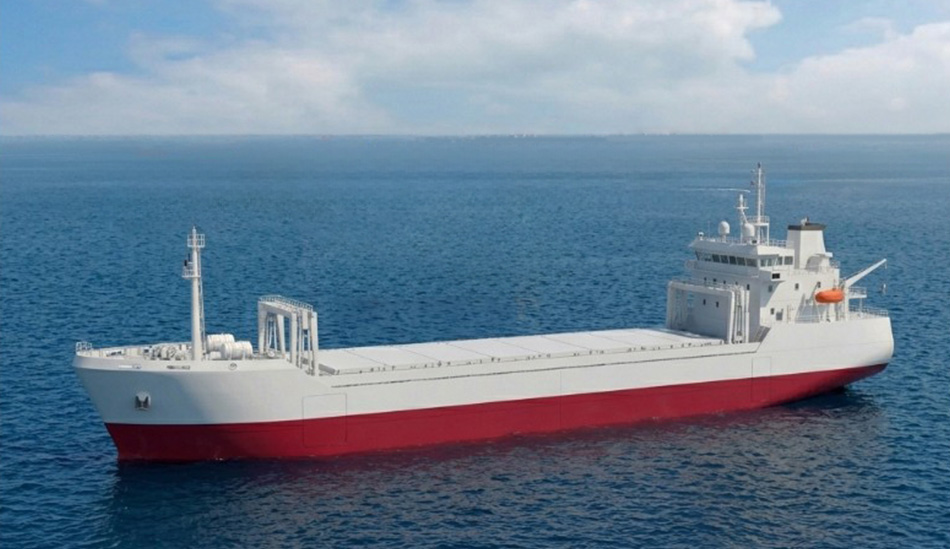
First Among Domestic Coastal Small-to-Medium Shipowners to Earn National Green Ship Certification from KOMSA
The hybrid-propelled vessel developed by Kumyang Shipping in technical cooperation with KR has officially received a "Grade 3 Green Ship Certification" from the Korea Maritime Transportation Safety Authority (KOMSA).
This certification marks the first tangible milestone achieved under the “Memorandum of Understanding (MOU) for Green Ship Development and Technical Cooperation” signed between the two companies in December 2025. In particular, it is drawing significant attention from the maritime industry as it represents the first time a domestic coastal, small-to-medium shipowner - rather than a major shipping line - has had its operational hybrid technology officially certified.
The certified vessel moves away from traditional diesel engine systems, adopting an Electric Hybrid Propulsion system that integrates generators with propulsion motors. This next-generation eco-friendly technology maximizes operational efficiency while drastically reducing sulfur oxides (SOx) and carbon dioxide (CO₂) emissions.
Through close cooperation with KR, Kumyang Shipping has continuously verified the safety and efficiency of the system. Additionally, the groundwork for this certification was laid with technical advisory and guidance from KOMSA regarding green ship verification. This achievement is being recognized as an innovative case study for proactively responding to the government’s “2050 Carbon Neutrality” roadmap and the tightening environmental regulations of the International Maritime Organization (IMO).
KR Drives IMO's Marine Environmental Agenda on Ammonia Effluent Management and NOx Reduction Technology
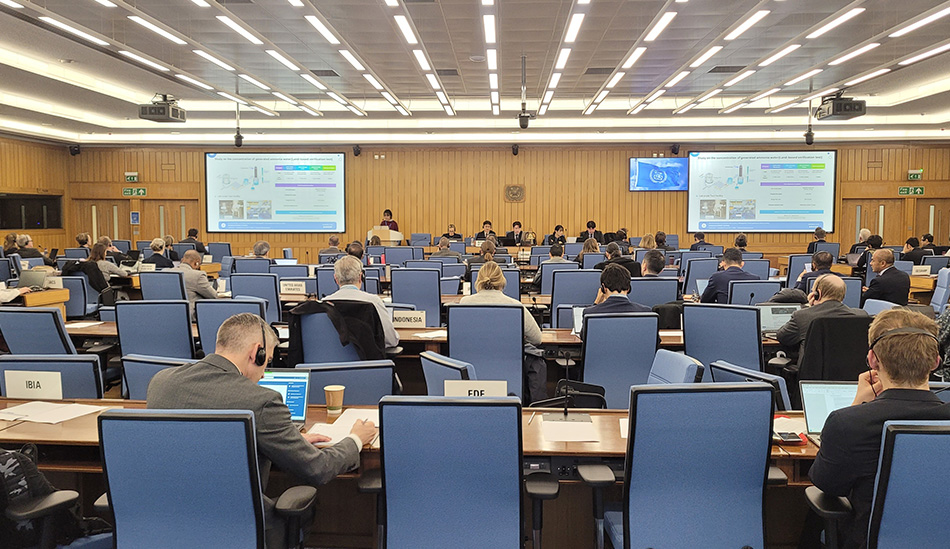
Leading the Development of Ammonia Wastewater Management Standards and NOx Reduction Technology Response Procedures
KR announced that it is serving as the Coordinator of two International Maritime Organization (IMO) expert groups in key marine environmental areas: ammonia effluent management and response procedures for nitrogen oxides(NOx) reduction strategy failures.
As international pressure to reduce greenhouse gas (GHG) emissions from ships intensifies, ammonia-fueled vessels are gaining traction as a zero-carbon alternative to conventional marine fuels. However, ammonia’s high toxicity means that ammonia effluent can be generated during vessel operation, and the absence of internationally agreed management standards continues to create uncertainty across the industry.
To proactively address this regulatory gap, KR established a joint working group in June 2025 in collaboration with the Ministry of Oceans and Fisheries (MOF), the Korea Testing & Research Institute (KTR), and five major Korean shipbuilders - HD Korea Shipbuilding & Offshore Engineering, HD Hyundai Heavy Industries, HD Hyundai Samho, Samsung Heavy Industries, and Hanwha Ocean - to build the necessary technical and regulatory foundations.
Building on this groundwork, KR partnered with MOF to present relevant technical considerations and lead expert session discussions at the 13th session of the IMO Sub-Committee on Pollution Prevention and Response (PPR 13) in February 2026. As a result, IMO decided to advance the formal consideration of ammonia effluent to 2027, ahead of its originally scheduled timeline.
Following the outcomes of PPR 13, a new expert group on ammonia effluent management has been established. Senior Surveyor KIM Joonghun of KR’s Convention & Legislation Service Team was appointed as the Coordinator, and the group held its kick-off meeting on May 7, 2026, with approximately 100 experts from government agencies, research institutions, as well as the shipbuilding and shipping industries participating from around the world.
The group will operate until PPR 14 as a preparatory body for the development of international guidelines. KR, in cooperation with MOF, will lead discussions on key agenda items including: the definition and scope of ammonia effluent; marine environmental impact assessment criteria; monitoring and record-keeping frameworks; data collection and sharing arrangements.
In parallel, KR also serves as the Coordinator of a separate expert group focused on developing guidelines for NOx reduction strategy failures and associated response procedures.
Deputy Senior Surveyor, KIM Changkyu of KR’s Convention & Legislation Service Team leads the discussions, providing practical support to shipowners and port authorities in implementing international regulations.
The outcomes of both groups are expected to serve as foundational references for the development of international guidelines at future IMO PPR sessions.
KR Demonstrates Technical Leadership in IMO Gas Carrier Regulation Revision
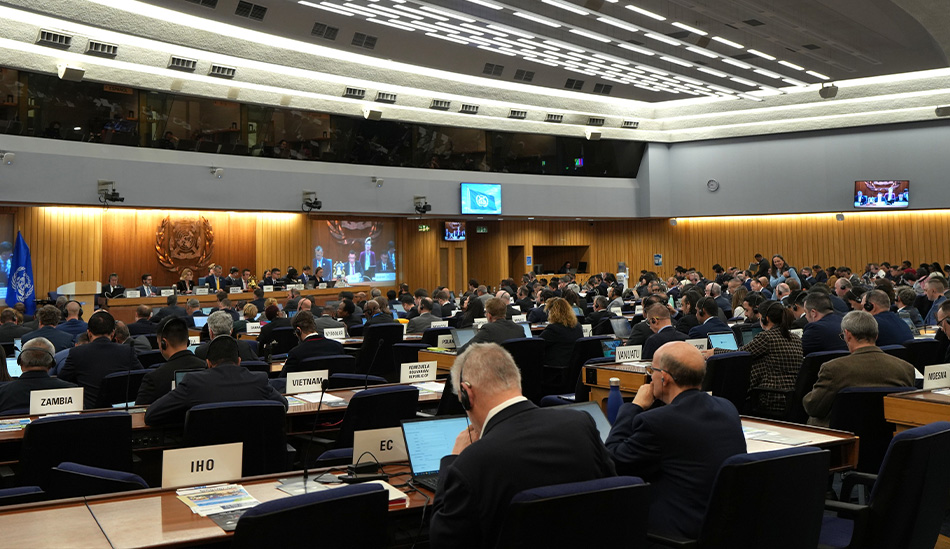
All Six KR Proposals Reflected in Final IMO Approval, Addressing Concerns of the Shipbuilding and Shipping Industries
KR has announced that the amendment to the International Code for the Construction and Equipment of Ships Carrying Liquefied Gases in Bulk (IGC Code) was granted final approval at the 111th session of the International Maritime Organization’s Maritime Safety Committee (MSC 111), held in London, UK in May. All six key proposals submitted by KR were incorporated into the final amendment.
What is the IGC Code?
The IGC Code is the international regulatory framework governing the structure and equipment of liquefied gas carriers, including LNG and LPG vessels. The IMO has been conducting revision discussions over several years to keep pace with technological advances in gas carriers and the growing adoption of eco-friendly vessels. The amendment is scheduled to be formally adopted at MSC 112 in December, with entry into force on 1 July 2028.
Over the past year, KR conducted a comprehensive impact analysis across all 97 articles of the IGC Code amendment, covering scope of application, design implications, and follow-up measures. Based on this analysis, KR published technical information circulars and held industry seminars to gather input from domestic shipping and shipbuilding stakeholders, identifying key technical issues.
Drawing on these findings, KR prepared four IMO amendment proposals, which were submitted to MSC 111 jointly with the Republic of Korea, China, Panama, and the International Association of Classification Societies (IACS). The key proposals included:

· Exemption of existing ships from retroactive application of Pressure Relief Valve (PRV) requirements Had the revised requirements been applied retroactively to vessels already in service under existing safety standards, an average of eight PRV replacements per ship - along with additional approvals and inspections - would have been required, imposing costs of hundreds of millions of Korean won per vessel and causing operational disruptions. KR proposed that the new requirements apply only to newbuildings, significantly reducing the financial burden on Korean shipping companies operating approximately 90 LNG carriers.
· Reduction of redundant emergency power requirements for hull heating systems
· Improvement of welding requirements for specific hull structures
· Restoration of existing ship safety requirements and correction of editorial errors
The domestic shipbuilding industry also raised concerns regarding the application timeline for newbuildings. One major Korean shipyard noted that approximately half of its roughly 80 contracted LNG vessels could fall under the revised IGC Code, expressing concern over design modifications, additional costs, and potential schedule delays.
In response, KR submitted two additional proposals through Panama and the Association of Shipbuilders and Shiprepairers of the European Union (ASEF). KR proposed replacing the single “keel-laying date” criterion with a three-date standard: - the date of the building contract; - the keel-laying date, where no building contract exists; and - the delivery date of the vessel. This proposal, strongly supported by the Korean government, was incorporated into the final amendment, resolving the issue of different regulations applying to sister ships built to the same design.
While some member states raised concerns about the three-date criterion during MSC 111 deliberations, the Korean government delegation - comprising the Ministry of Oceans and Fisheries (MOF) and KR - actively presented technical justifications based on impact analysis results and IMO guidelines, facilitating smooth consensus.
KR plans to revise its “IGC Code Amendment Impact Analysis Technical Information” document in light of the MSC 111 outcomes, with publication scheduled for July. The document will address the scope of application and recommended follow-up measures for shipowners and shipyards.