Regulatory Updates
KR Decarbonization Magazine
VOL.13 | JULY 2026
| MEPC 84: A Turning Point for the Future of
IMO Mid-Term GHG Measures |

The First Major Test Following the Delay in NZF Adoption
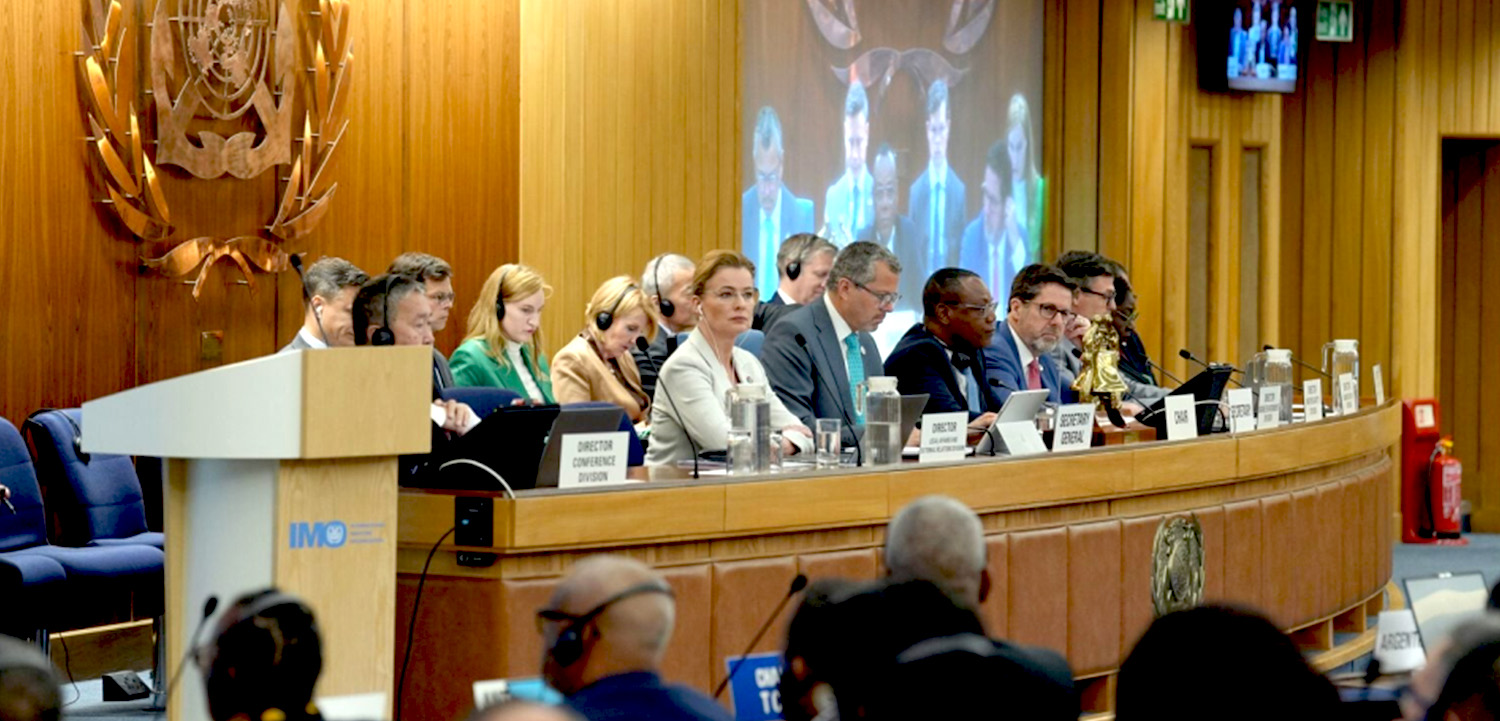
MEPC 84 was more than a routine session focused on amendments to environmental regulations or the adoption of technical guidelines. Rather, it marked a significant moment in which differing views among IMO Member States on the future direction of mid-term greenhouse gas (GHG) reduction measures and the practical implementation of maritime decarbonization strategies became increasingly apparent. As the first regular session following the postponement of the adoption of MARPOL Annex VI amendments incorporating the IMO Net-Zero Framework (NZF) at the Extraordinary Session of MEPC (MEPC ES.2) in 2025, the meeting served as an important platform for assessing whether the existing NZF architecture should be maintained or revised to better reflect market realities and implementation challenges.
The IMO mid-term measures currently under discussion are centered on the regulation of a ship’s Greenhouse Gas Fuel Intensity (GFI), with compliance achieved through mechanisms such as Remedial Units (RUs) and Surplus Units (SUs) to offset emissions exceeding prescribed targets. However, significant differences remain among Member States regarding the continuation of the contribution-based financial mechanism and the overall practicality of the framework. As a result, detailed discussions on implementation and governance arrangements are expected to continue within future sessions of the Intersessional Working Group on Reduction of GHG Emissions from Ships (ISWG-GHG).
Diverging Member State Positions and the Emergence of Alternative Approaches
During MEPC 84, a clear divide emerged between those advocating the preservation of the existing NZF framework—particularly the European Union and Small Island Developing States (SIDS)—and those expressing concerns regarding compliance costs, fuel availability, and industry readiness, including the United States, several oil-producing nations, and major maritime economies. Against this backdrop, alternative proposals submitted by Liberia and Japan attracted considerable attention as potential pathways for refining the current framework.
Alternative Proposals Reflecting Market Realities
The Liberian co-sponsored proposal emphasized a more market-oriented approach to decarbonization. Rather than relying on predetermined regulatory targets, the proposal suggested linking GFI reduction pathways to practical market indicators such as the price competitiveness, availability, and scalability of low-carbon fuels. In addition, it favored enhancing market flexibility through expanded SU banking, borrowing, and trading mechanisms, while avoiding the establishment of a dedicated IMO Net-Zero Fund. By proposing a long-term and predictable decarbonization trajectory aligned with market readiness, the proposal sought to improve investment certainty and facilitate a smoother industry transition. Nevertheless, questions remain regarding the effectiveness of compliance mechanisms and the robustness of the proposed enforcement framework in cases where reduction targets are not achieved.
Japan’s proposal, by contrast, largely retained the overall architecture of the existing NZF while seeking to improve its practicality and reduce the burden on industry stakeholders. Key elements included easing mandatory financial contributions, expanding the use of SUs to increase compliance flexibility, and adjusting GFI reduction trajectories to better reflect the transitional role of fuels such as LNG. The proposal also highlighted the importance of considering future transport demand and anticipated energy-efficiency improvements when establishing long-term reduction pathways. Furthermore, it maintained support for the technology-neutral principle based on life-cycle assessment (LCA), while emphasizing the need to better account for the actual performance and operational characteristics of different fuel options.
Comparative Assessment of the NZF and Alternative Proposals
While the existing NZF has been recognized for providing a relatively clear decarbonization signal through the combination of technical and economic measures, concerns persist regarding its complexity, compliance costs, and alignment with current fuel market realities. Conversely, the Liberian and Japanese proposals seek to enhance flexibility and implementation feasibility by incorporating market conditions and industry concerns more directly into the regulatory framework. However, critics argue that such approaches may weaken environmental ambition and reduce long-term incentives for the adoption of zero- and near-zero-emission fuels.
Beyond Decarbonization Regulation: Towards Industrial Policy Transformation
The discussions at MEPC 84 demonstrated that maritime decarbonization is no longer solely an environmental issue. Instead, it has evolved into a broader industrial and economic policy challenge closely linked to global energy supply chains, fuel markets, geopolitical considerations, industrial competitiveness, and international financial mechanisms. Unlike earlier IMO measures such as EEDI, EEXI, and CII, which primarily focused on improving vessel efficiency, the proposed mid-term measures effectively introduce a form of carbon pricing by directly associating economic costs with fuel choices and GHG emissions. At the same time, the meeting highlighted the growing importance of practical constraints, including limited alternative fuel availability, high investment requirements, technological uncertainty, and regional infrastructure disparities.
Ultimately, MEPC 84 underscored that maritime decarbonization policy has entered a new phase characterized by industrial transformation and market restructuring rather than environmental regulation alone. Discussions at future ISWG-GHG meetings and subsequent MEPC sessions are expected to focus on potential revisions to the NZF, alternative mid-term measures, burden-sharing arrangements, criteria for zero- and near-zero-emission fuels, and further development of LCA methodologies. The outcomes of these negotiations are likely to have far-reaching implications for the global maritime and shipbuilding industries. Accordingly, industry stakeholders must continue to closely monitor regulatory developments, accelerate technological innovation, and actively participate in international discussions to strengthen their long-term competitiveness in an increasingly carbon-constrained maritime sector.