Insights
KR Decarbonization Magazine
VOL.14 | OCTOBER 2026
Technical Considerations for Maritime SMRs and
International Regulatory Trends
Sangick Lee
Section Head, System Safety Research Team, KR

|
Executive Summary
Growing maritime decarbonization requirements and electricity demand are increasing interest in marine nuclear power and SMR applications, which offer high energy density and potential suitability for long-duration operations.
However, marine reactors require integrated design and regulatory approaches addressing ship motions, space and weight constraints, safety, fuel cycles, maintenance, and decommissioning.
Accordingly, IMO is pursuing revisions to the Nuclear Code and SOLAS Chapter VIII, while the IAEA is developing an international framework for marine nuclear applications through the ATLAS project.
Korean Register is contributing through cooperation with IMO, IAEA, IACS, and NEMO, supporting the development of technical standards, regulatory frameworks, and international cooperation for marine nuclear applications.
Growing Interest in the Maritime Applications of Nuclear Power in the Era of Shipping Decarbonization
Growing Interest in the Maritime Applications of Nuclear Power in the Era of Shipping Decarbonization With the strengthening of decarbonization regulations in the international shipping sector and the growing demand for electricity driven by the expansion of AI and data centers, interest in the maritime application of nuclear energy has been growing recently. Nuclear energy is being reconsidered as an alternative because it has a relatively low dependence on fuel supply chains and does not directly emit carbon dioxide (CO2) during operation. Due to its high energy density, nuclear energy can operate for long periods without refueling, aligning well with the shipping industry's need for long-distance and high-power operations. Under a regulatory environment where carbon emission costs are increasing, vessels with no direct CO2 emissions during operation may gain a competitive advantage under upcoming international and regional regulatory frameworks.
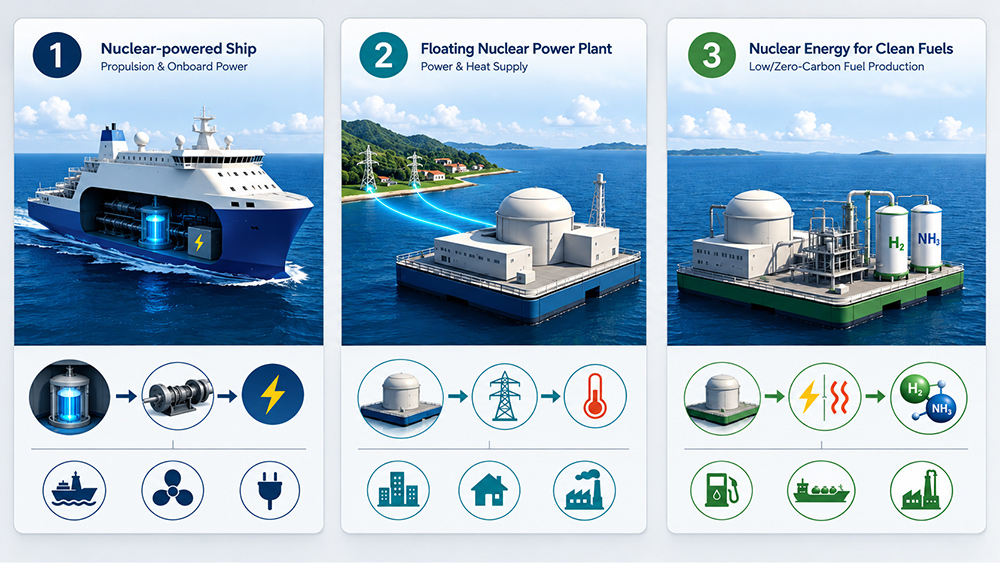
There are three primary methods proposed for utilizing nuclear energy in the maritime sector :
· Propulsion and Onboard Power Supply : Utilizing nuclear energy as an energy source for vessel propulsion and onboard electricity supply.
· Floating Nuclear Power Plants (FNPPs) : Installing floating nuclear power plants in coastal or island areas to supply electricity and heat.
· Offshore Production Platforms for Low and Zero Carbon Fuel Production : Operating offshore platforms that use nuclear-generated electricity and heat to produce low-carbon or zero-carbon fuels such as hydrogen and ammonia.
Applications of Marine Nuclear Power
Source: AI-generated image
To apply nuclear energy in maritime environments, numerous considerations must be reviewed. These include reactor-vessel integration technology, safety, regulatory and licensing frameworks, economic feasibility, operational infrastructure, and social acceptance. KR is preparing a detailed technical document covering these aspects, scheduled for distribution in the second half of 2026. This document outlines the technical considerations and international regulatory trends for maritime nuclear application and introduces KR’s related activities.
Technical Considerations for Marine Reactors
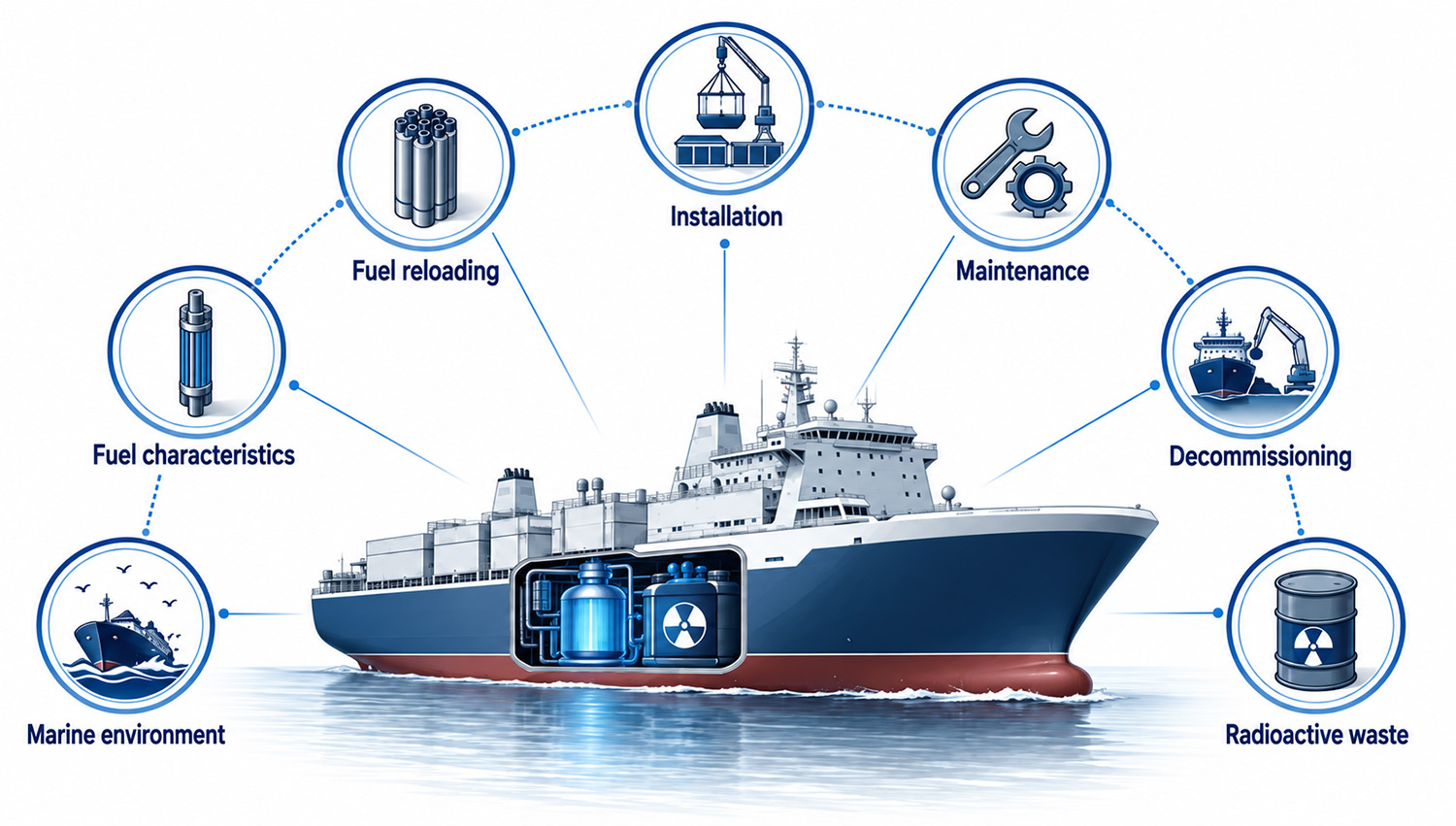
When evaluating reactors suitable for maritime applications, it is difficult to judge based solely on technological maturity or power output of each reactor type. For land-based reactors, ship motion, space and weight constraints, and port entry conditions are generally not considered major design limitations. However, for marine reactors, these elements directly affect reactor layout, structural integrity, operational safety, and maintainability, and thus must be reflected as key design criteria. Therefore, the selection of maritime reactors must focus on whether the reactor and the vessel can operate safely as an integrated system.
·Maritime Environmental Applicability
The maritime environment presents operational conditions fundamentally different from those of land-based nuclear power plants. During voyages, ships continuously experience six-degree-of-freedom (6-DoF) motions, such as rolling, pitching, and heaving, and are exposed to dynamic environments including wave loads, vibration, shock, and inclination. Thus, reactor cooling systems, nuclear fuel arrangements, control rod drive mechanisms, and instrumentation and protection systems must maintain normal functionality under these conditions.
In particular, passive safety systems based on natural circulation rely heavily on gravity, meaning their performance could degrade under ship motion and inclined conditions. Therefore, for maritime application, it must be demonstrated that passive safety functions are maintained under various vessel attitudes and motion conditions, and an appropriate combination with active safety systems may be required if necessary. Additionally, structural protection concepts must be reviewed to ensure that maritime accidents such as collision, grounding, flooding, and fire do not escalate into reactor accidents.
·Nuclear Fuel Characteristics
Due to space constraints and long-term operation requirements, the performance of nuclear fuel is critical for marine reactors. Key factors to consider include uranium enrichment, fuel lifetime, thermal stability, and chemical behavior during accidents. Furthermore, marine reactors must balance long operating periods with non-proliferation requirements. The potential for flammable gas (such as hydrogen) generation during accidents is an important evaluation factor from a fire/explosion risk perspective. The chemical stability of the fuel and coolant is an important selection criterion.
·Refueling Cycle
Since merchant ships and floating nuclear power plants operate in ports worldwide or are stationed in specific maritime areas for long periods, refueling must be minimized. Regular refueling every few years, like typical land-based nuclear plants, can be disadvantageous in terms of economics and operation.
Consequently, marine reactors often adopt long-cycle operation as a basic design objective, and some next-generation reactor concepts aim to operate without refueling for the entire service life of the vessel. This approach can improve safety and security by reducing the frequency of nuclear fuel handling, while also offering the advantage of reducing dependence on fuel handling infrastructure at ports.
·Suitability for Onboard Installation
Because reactors must be installed within the limited space of a ship, space and weight constraints are extremely critical. All components—including the reactor unit itself, radiation shielding, containment structures, cooling systems, electrical systems, and radiation-controlled areas—must be integrated with and assessed as part of the overall ship design.
In particular, radiation shielding is essential for crew protection but can cause signifi cant weight increases, directly impacting the ship's stability, center of gravity, and cargo capacity. Therefore, reactor layout and hull structural design must be carried out simultaneously from the initial basic design stage, and the interface with the ship's propulsion and electrical power systems must also be considered.
·Maintenance and Inspection
Unlike land-based nuclear plants, nuclear-propelled vessels have limited access to maintenance personnel and equipment. Therefore, maintenance and inspection strategies must be considered from the early stages of design. It is necessary to clearly distinguish between the scope of inspection that can be performed at sea and the work that must be carried out in ports or onshore maintenance bases.
In addition, the application of remote monitoring, condition-based maintenance (CBM), high-reliability designs, and fault-tolerant design concepts is essential. In marine environments lacking access to maintenance, the use of long-life components and modular designs is required to enhance reactor availability.
·Ease of Decommissioning
Unlike conventional ships, nuclear-propelled vessels require simultaneous reactor decommissioning and radioactive material management after retirement. Therefore, considering the ease of decommissioning from the design stage is crucial.
To minimize worker exposure and reduce costs during decommissioning, modular reactor design, secured access paths, decontamination-friendly materials, and the potential for separating and removing the reactor compartment should be considered in advance. Specifi cally, because the limited space inside a vessel can complicate decommissioning activities, designs that allow removal of the entire reactor module as a single unit may be advantageous.
·Radioactive Waste Management
Radioactive waste management is also a key challenge that must be resolved for the commercialization of maritime nuclear energy. During operation, spent nuclear fuel, replaced parts, fi lters, resins, and contaminated materials may be generated, and additional radioactive waste can be produced during the decommissioning stage.
Therefore, from the design stage, system simplifi cation, long-life components, and design measures to prevent the spread of contamination should be refl ected to minimize waste generation. For fl oating nuclear plants, on-board storage followed by transfer to onshore facilities is being considered. For nuclear-propelled ships, approaches to reduce the burden of spent fuel management through minimized refueling or refueling-free designs are being proposed.
Technical Considerations for Marine Nuclear Applications
Source: Google Gemini, AI generated image
International Regulatory Trends
Introducing nuclear-propelled vessels requires not only technological development but also the establishment of supporting regulatory and institutional frameworks. Since nuclear-propelled ships are systems subject to two distinct regulatory regimes—nuclear safety and maritime safety—simply applying the regulations of existing land-based nuclear facilities is insuffi cient. An integrated regulatory approach refl ecting maritime environments and international operating characteristics is required. Currently, the regulatory framework related to nuclear-propelled ships can be understood as a multi-layered structure consisting of international instruments and standards, national laws, and classification rules.
At the international level, the IAEA establishes standards for nuclear safety and radiation protection, while the IMO establishes international standards and regulations for maritime safety and ship operations. Specifically, Chapter VIII of the International Convention for the Safety of Life at Sea (SOLAS) (1974) sets out basic requirements for nuclear-powered ships, and the Code of Safety for Nuclear Merchant Ships (Nuclear Code), adopted in 1981, provides more detailed requirements and criteria for design, construction, inspection, and operation.
However, because a significant amount of time has passed since their adoption, current regulations do not sufficiently reflect recent advances in reactor technology and maritime application concepts. In particular, the existing framework is primarily based on pressurized water reactor (PWR) technology, posing limitations in applying next-generation reactor technologies to the maritime sector. In addition, updates are required for alignment with the latest IAEA safety standards, passive safety concepts, radiological emergency response, and the integrated approach to the 3S principles (Safety, Security, and Safeguards).
It is noteworthy that the IMO has recently begun revising existing norms. The 110th Maritime Safety Committee (MSC) recognized the need to revise the "Nuclear Code" to reflect the latest nuclear technology developments and began discussions on the revision. Additionally, they agreed to review amendments to SOLAS Chapter VIII. Subsequently, at the 12th Sub-Committee on Ship Design and Construction (SDC) in 2026, a work plan for developing safety regulations for vessel decarbonization technologies and alternative propulsion systems was established. This plan aims to finalize the draft amendments to the Nuclear Code and SOLAS Chapter VIII at SDC 16 in 2030, followed by approval at MSC 117 and adoption at MSC 118. This demonstrates that the regulatory framework for nuclear-propelled ships is no longer a stagnant area but is entering an active and comprehensive revision phase to reflect state-of-the-art technologies and maritime application conditions.
The IAEA launched the ATLAS (Atomic Technologies Licensed for Applications at Sea) project to support the safe and peaceful deployment of nuclear technologies in maritime applications. ATLAS aims to identify, better understand, and address major challenges and barriers associated with the deployment of civilian nuclear technology at sea, ultimately building a robust framework to facilitate and support their deployment. Through ATLAS, the IAEA plans to establish a framework that integrates relevant international standards and guidelines on maritime nuclear safety, security, and safeguards, ensuring compliance with applicable regulations, conventions, and laws.
The ATLAS launch event was held in Washington, D.C., in August 2026. This launch event addressed strategic perspectives on the deployment of civilian nuclear-propelled vessels and floating nuclear power plants, as well as the importance of international cooperation between the nuclear and maritime communities. The discussions covered legal, regulatory, and policy challenges related to the development and deployment of civilian nuclear-powered ships, including SMRs and their reactor fuels, in marine environments. Furthermore, six project groups were established to discuss international safety regulations and standards, legal and regulatory frameworks, maritime classification, nuclear safeguards, nuclear security, and deployment roadmaps to enable maritime nuclear energy.
While IMO and IAEA international standards will provide the baseline for ensuring the safety of nuclear-propelled ships, practical application requires alignment with national laws and administrative frameworks. Since ships navigate international routes and enter various ports, key considerations include the allocation of responsibilities and authorities between flag States and port States, the linkage between international standards and domestic regulations, and the mutual acceptance of safety assessment data.
The regulatory and institutional framework for nuclear-propelled ships must evolve beyond simply applying land-based nuclear and maritime regulations in parallel; it must develop into integrated regulations that reflect the marine environment and international operational characteristics. Therefore, for future commercialization, mutual cooperation among international organizations, nuclear regulatory bodies, and classification societies is essential to establish a regulatory framework aligned with the latest technologies and operational conditions.
KR’s Response to Marine Nuclear Energy and Expansion of International Cooperation
KR is actively engaged in various initiatives in the field of nuclear-propelled vessels, focusing on building a foundation for domestic cooperation, responding to international regulatory changes, defining KR’s role as a classification society, and expanding international networks. These efforts represent a proactive approach to participating in the development of future standards and regulatory frameworks beyond simple technical reviews at this early stage, where both the technology and norms of nuclear-propelled vessels are taking shape simultaneously.
KR has co-chaired a Joint Working Group (JWG) in collaboration with the Korea Atomic Energy Research Institute (KAERI), with participation from nuclear-related organizations, regulatory bodies, shipyards, and shipping companies. Through this, KR has shared technical challenges and institutional issues necessary for nuclear-propelled vessels, building a foundation for domestic cooperation. These activities are significant as they go beyond individual institutional research to establish a collaborative structure for future domestic demonstration and regulatory development and improvement.
Simultaneously, KR is participating in discussions on the development and revision of international regulatory frameworks. Through activities related to the IMO MSC and SDC, KR is reviewing the limitations of the current safety framework for nuclear merchant ships and responding to discussions on revising the "Nuclear Code" and SOLAS Chapter VIII. In particular, since the regulatory gap analysis and future work plans related to nuclear-propelled ships have intensified since MSC 110, analyzing related trends and developing technical responses has become increasingly crucial.
By participating in the IAEA's ATLAS project, KR is contributing to the harmonization and cooperation between international nuclear and maritime regulatory frameworks, actively participating in international efforts to develop an integrated maritime nuclear framework. Through this, KR aims to support the safe development and operation of nuclear-propelled ships and floating nuclear power plants, contributing to the establishment of a system that ensures appropriate and effective safety throughout the full life cycle of maritime nuclear facilities.
Furthermore, KR is expanding its scope of activity by participating in international private-sector cooperation networks. Established in London in March 2024, NEMO (Nuclear Energy Maritime Organization) aims to support the development of international standards and regulations applicable throughout the lifecycle of nuclear energy applications in the maritime sector, from adoption and operation to decommissioning. KR joined as a Full Member in July 2024, contributing to the formation of an international regulatory framework for maritime nuclear technology. Through this, KR has secured a platform to directly participate in discussions on international standards and systems related to nuclear applications in the maritime sector, going beyond mere technical reviews.
In this way, KR is refining its technical foundation and expanding its international network through the operation of the domestic JWG and participation in IMO, IAEA, IACS, and NEMO. KR is playing a key role in forming technical standards, establishing institutional frameworks, and building a foundation for international cooperation, rather than remaining merely a technical review body in the maritime nuclear field.
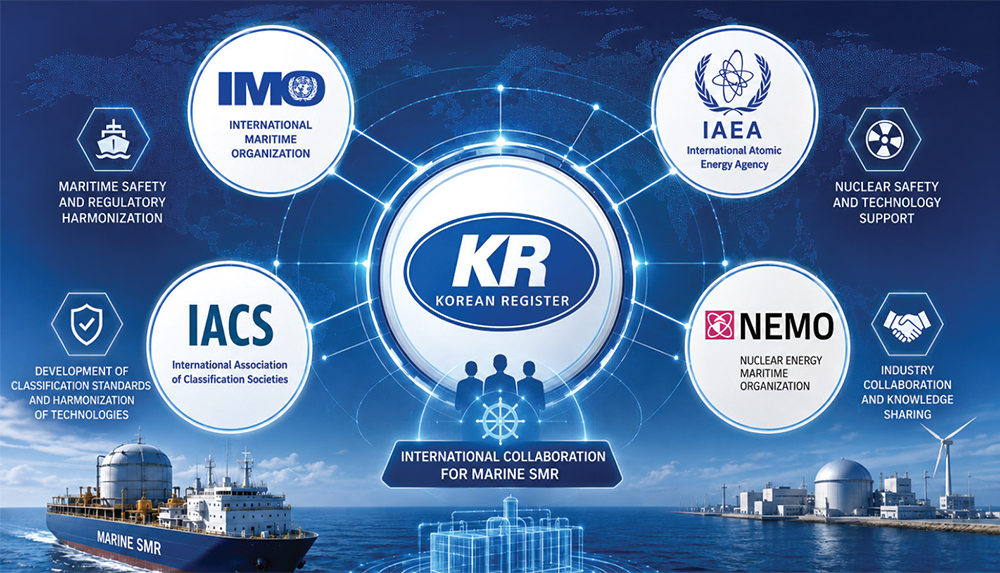
Source: Google Gemini, AI generated image

- Executive Summary
- The First Compliance Cycle of FuelEU Maritime
- 2025 Compliance Year Outcomes
- Pooling Market Trends and Price Dynamics
- Cost-Effectiveness Analysis of Compliance Options
- Strategic Outlook and Recommendations for Fleet Operators
- Future Decarbonization Regulatory Environment
- FuelEU Maritime: From Compliance to Decarbonization Investment
FuelEU Maritime : Outcomes of the First Compliance Cycle and Future Market Strategies
JinHyung Kim
GM of Green Ship Technology Team, KR

|

Executive Summary
FuelEU Maritime has applied since 1 January 2025, regulating the well-to-wake GHG intensity of ships above 5,000 GT calling at EU ports, with the first compliance cycle demonstrating a functioning market-based compliance mechanism.
Approximately 92% of ships used pooling in the first year, making flexibility mechanisms the predominant compliance approach, while surplus began to acquire tradable economic value.
The surplus price gradually declined from its initial level, settling at approximately 80% below the penalty level.
As requirements tighten, shipowners will need fleet-level strategies for pooling, surplus management, and alternative-fuel adoption, while integrating FuelEU Maritime, EU ETS, and IMO CII into their long-term decarbonization strategies.
The First Compliance Cycle of FuelEU Maritime
·The Regulatory Framework
Regulation (EU) 2023/1805 (FuelEU Maritime) targets vessels of 5,000 gross tonnage (GT) and above, regardless of flag, that call at EU maritime ports. The regulation mandates a progressive reduction in the GHG intensity of the energy used on board, calculated on a Well-to-Wake (WtW) basis to capture emissions from production through combustion. The baseline is set at 91.16 gCO2eq/MJ, with the reduction pathway beginning at a 2% decrease in 2025 and ramping up every five years to reach an 80% reduction by 2050.
Vessels that surpass the mandated GHG reduction targets generate a positive compliance balance (measured in gCO2eq), which represents a surplus. This surplus can be banked for future years (banking) or pooled with other vessels (pooling). Conversely, vessels that fail to meet the target generate a deficit, which must be resolved by paying a penalty, borrowing from the vessel's future compliance balance, or acquiring a surplus via a pool.

2025 Compliance Year Outcomes
The first compliance year concluded with key milestones occurring in 2026: monitoring data was reported by January, verified by March, flexibility mechanisms (banking, borrowing, pooling) executed by April, and Document of Compliance (DoC) certificates issued in June. According to the European Commission's official analysis, the distribution of compliance methods was heavily skewed toward collaborative market-based mechanisms:
· Pooling Strategy: Approximately 92% of regulated vessels utilized the pooling mechanism, representing the overwhelming majority of the market.
· Direct Compliance: Only about 3% of vessels directly complied by switching to low-carbon alternative fuels or technologies on board.
· Financial Penalties: About 3% of vessels failed to meet the targets and resolved their deficits by paying the official regulatory penalties.
· Borrowing Mechanism: The remaining 2% of vessels resolved their deficits by borrowing from their own future compliance balances.
2025 FuelEU Maritime Compliance Method Selection
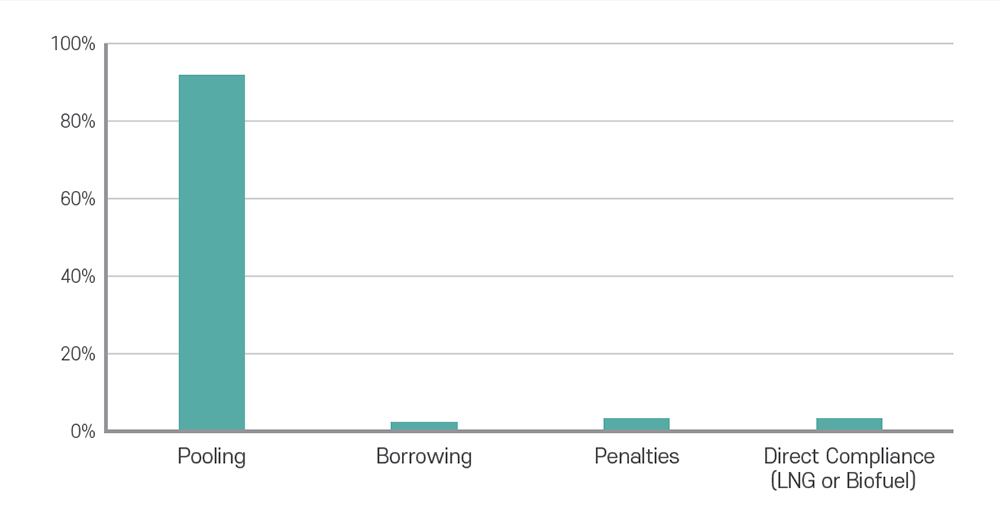
The overwhelming reliance on pooling (92%) indicates that the market quickly recognized the economic benefits of pooling over direct fuel switching or paying penalties during the initial phase. It also confirms that a robust supply of surplus was available, allowing the pooling market to function efficiently as a compliance mechanism from day one.
Pooling Market Trends and Price Dynamics
·Market Mechanism and Fragmentation
Because there is no centralized EU-administered exchange for FuelEU Maritime surpluses (unlike the EU Emissions Trading System (EU ETS)), pooling transactions occur bilaterally, within shipping groups, or through a fragmented network of over 10 third-party digital platforms. This decentralized structure makes comprehensive market pricing opaque. However, transaction data from leading platforms provides clear insights into the price trajectory of surpluses.
·Price Deflation in Mid-2026
Data from two major platforms, OceanScore and BetterSea, from May to July 2026 show a pronounced, synchronized decline in the price of surpluses per ton of CO₂-equivalent (tCO2eq):
FuelEU Maritime Pooling Price Trends (May - July 2026)
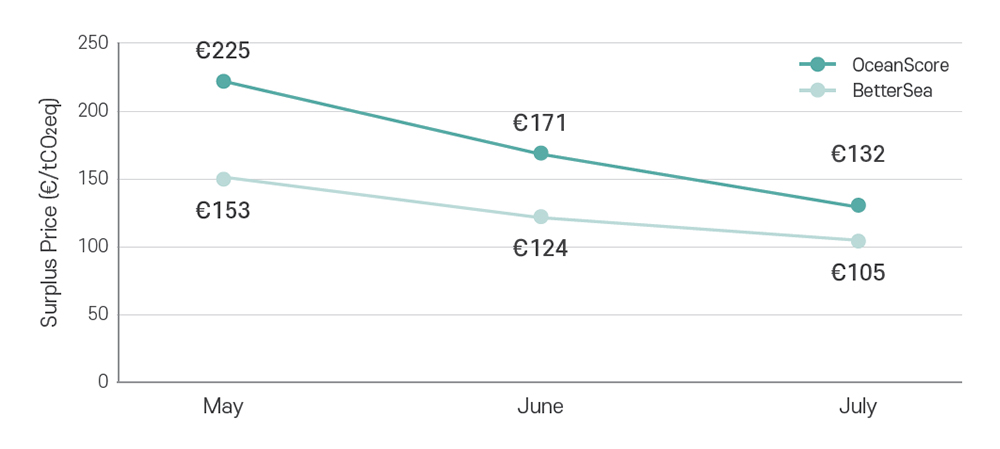
While a price gap exists between platforms, both reflect a strong downward trend. This price deflation is driven by three main factors:
· Surplus Oversupply: The modest 2% reduction target in the first compliance phase, combined with banking allowances, means surplus supply will likely outstrip demand until the end of the first compliance period in 2029.
· Easing Buyer Pressure: Once the initial compliance cycle and verification deadlines passed in mid-2026, immediate buying pressure subsided, cooling the market.
· Fossil Fuel Price Increases: Geopolitical instability, such as risks in the Strait of Hormuz, has driven up conventional fossil fuel prices, thereby narrowing the premium of biofuels (e.g., B30) and lowering the relative cost of direct GHG abatement.
Cost-Effectiveness Analysis of Compliance Options
To guide fleet operators, a comprehensive economic analysis was conducted comparing three compliance pathways: VLSFO + Pooling (offsetting VLSFO deficit by purchasing market surplus), B30 Biofuel (direct compliance using a 30% waste-cooking-oil-based biofuel blend), and VLSFO + Penalty (paying the regulatory penalty of €2,400 per ton of VLSFO-equivalent deficit). The analysis integrates both FuelEU Maritime costs and EU ETS allowance costs.
Among the three pathways analyzed, VLSFO + Pooling proved the most cost-effective option, followed by B30 biofuel, while VLSFO + Penalty was the least cost-effective.
Cost effectiveness of compliance scenario under EU regulations (kEUR)
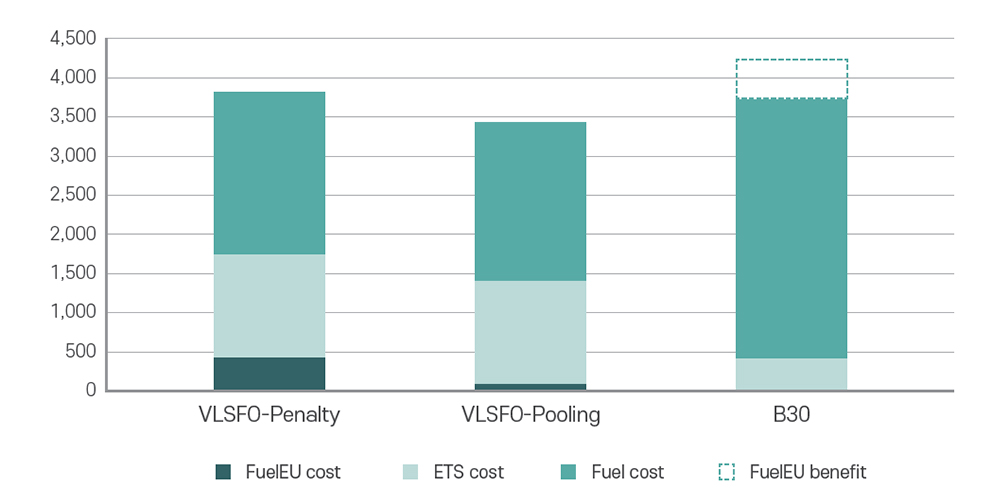
* Fuel consumption: 5,000 tons of VLSFO and equivalent consumption for B30;
Price data: Fuel VLSFO 476 $/t and B30 740 $/t (2025 Rotterdam average), EUA 80 €/tCO2eq, Surplus 120 €/tCO2eq, Currency 0.8631 €/$
** These analysis results may vary depending on fuel prices, emission factors, EU Allowance (EUA) prices, and surplus prices.
Strategic Outlook and Recommendations for Fleet Operators
·The Post-2030 Regulatory Cliff
The current surplus oversupply and low prices are temporary. Shipping companies must not base their long-term decarbonization roadmaps on the easy compliance conditions of the first few years. The regulatory landscape will shift dramatically over the next decade:
· 2030 Onshore Power Supply (OPS): Passenger and container ships must connect to OPS or use zero-emission technologies while at berth in EU ports.
· 2030 Target Hike: The GHG intensity reduction target increases from 2% to 6%, significantly reducing the generation of surpluses and shifting the market to a deficit.
· 2034 RFNBO Mandate: A strict sub-quota requiring at least 2% of a vessel's annual energy to come from Renewable Fuels of Non-Biological Origin (RFNBOs, e.g., e-fuels).
Note on Alternative Fuel Economics: For alternative fuels, the marginal abatement cost (MAC) should not be compared to the surplus price in isolation. A comprehensive assessment is required that accounts for EU ETS-side benefits, the fuel allocation effect within FuelEU Maritime, and additional regulatory regimes such as those of the IMO and the UK.
·Surplus Supply/Demand Reversal
Until 2029, while the reduction target remains at 2%, the supply-dominant trend is expected to continue, keeping downward pressure on prices. As the target tightens to 6% from 2030, the supply of market surpluses will then shrink rapidly, and surplus prices are projected to rise significantly, approaching the regulatory penalty rate. The penalty rate is expected to act as a ceiling on surplus prices; as prices approach that level, the resulting purchase burden — combined with the 10% surcharge for consecutive penalty payments — will strengthen the economic incentive to switch to alternative fuels.
For buyers, the price decline observed after the end of the first compliance cycle suggests they should monitor whether a similar pattern recurs in future cycles, and treat purchase timing as a strategic variable.
·Strategic Recommendations for Shipowners
· Avoid Surcharged Penalties: Regulators impose a 10% surcharge on consecutive years of penalty payments. Shipowners must avoid consecutive non-compliance as a default strategy.
· Fleet-Level Asset Optimization: Surplus and deficit management should be handled at the fleet level. Depending on whether the same volume of low-carbon fuel is distributed across multiple vessels or concentrated on specific vessels, compliance-balance management and pooling strategy can differ significantly ??a fleet-level review of optimal allocation is needed.
· Surplus Asset Management: Surplus-generating fleets should treat surpluses as a strategic financial asset, deciding whether to bank them for future self-compliance or sell them to capture current market value.
· Deploy Energy Saving Devices (ESDs): While ESDs do not directly affect GHG intensity, they help reduce energy consumption and penalty costs. Moreover, the economic value of ESDs improves as the price of the alternative fuel used increases.
· Leverage Wind-Assisted Propulsion: Wind propulsion technologies receive a reward factor of up to 5% in the FuelEU Maritime GHG intensity calculation formula, providing an additional compliance advantage.
· Comprehensive Regulatory Strategy: Alongside the progressively tightening GHG intensity targets, the at-berth fossil-fuel ban, and the RFNBO mandate under FuelEU Maritime, shipowners should formulate strategies that also account for other regimes such as the EU ETS and IMO?셲 Carbon Intensity Indicator (CII).
"Note: The results of this analysis may vary depending on fuel prices, emission factors, EUA prices, and surplus prices, among other factors."

Future Decarbonization Regulatory Environment
The success of FuelEU Maritime is expected to serve as a blueprint for the International Maritime Organization (IMO)’s upcoming Net-Zero Framework (NZF). While FuelEU Maritime contains clauses to review and align with the IMO framework to prevent double-regulation, significant technical differences remain. Furthermore, while EU regulations are already fully operational, IMO negotiations are still ongoing. This regulatory uncertainty may cause confusion in the industry's mid- to long-term strategy planning and should be resolved as soon as possible.
Comparison and Analysis between IMO NZF and EU FE
| IMO NZF | EU FEM | ||||
|---|---|---|---|---|---|
| Applied ship | All international shipping | Ships calling at EU | |||
| Ship size | Above 5,000 GT | Above 5,000 GT | |||
| Scope | All voyages | EU voyage (50% of Extra-EU and 100% of Intra-EU) |
|||
| GHG Intensity | gCO2eq/MJ based on Well-to-Wake | gCO2eq/MJ based on Well-to-Wake | |||
| GHG Coverage | CO₂, CH₄, N₂O (including Slip emissions) | CO₂, CH₄, N₂O (including Slip emissions) | |||
| GWP | 100 years GWP - IPCC AR5 | 100 years GWP - IPCC AR4 | |||
| GHG Intensity Limit(gCO2eq/MJ) | Base Target | Direct Target | FEM Target | ||
| 2028 | 89.57 | 77.44 | 2028 | 89.34 | |
| 2030 | 85.84 | 73.71 | 2030 | 85.69 | |
| 2035 | 65.31 | 53.18 | 2035 | 77.94 | |
| 2040 | 32.66 | TBC | 2040 | 62.90 | |
| 2050 | TBC | TBC | 2050 | 18.23 | |
| Penalty (per tCO2eq of compliance deficit) |
Base Target: Max. $ 380 / Direct Target: $ 100 | Approx. € 640 for liquid fossil fuel | |||
| Surplus | · Transfer to another ship having Tier 2 deficit · Banking with validity of two years |
· Pooling with another ship having deficit · Banking with permanent validity |
|||
| RFNBO | Not mandatory to use | Rewards by 2033 and mandatory to use from 2034 | |||
| Onshore Power | Not mandatory, it can be included as ZNZs | From 2030, mandatory for container and passenger ships | |||
FuelEU Maritime: From Compliance to Decarbonization Investment
The First compliance cycle confirms that FuelEU Maritime's market-based mechanisms can function effectively — while also showing that regulatory compliance does not necessarily equate to substantive decarbonization. While short-term cost optimization favors pooling, long-term survival will require physical fuel transition and capital investment as targets tighten. Fleet operators must act now by evaluating their fleet's multi-year regulatory exposure and formulating robust decarbonization pathways.